Algae on the facade: causes, consequences and what helps
First a green tinge on the weather side, a few years later a green veil over the whole wall: algae are one of the most common reasons why a facade looks old. Read where they come from and what really helps.
In brief
- Algae need one thing above all: a facade that stays damp for a long time.
- Pure algae growth is mainly a cosmetic problem. Mosses and lichens can attack the render in the long run.
- The earlier you clean, the easier the growth is to remove.
How to recognise algae
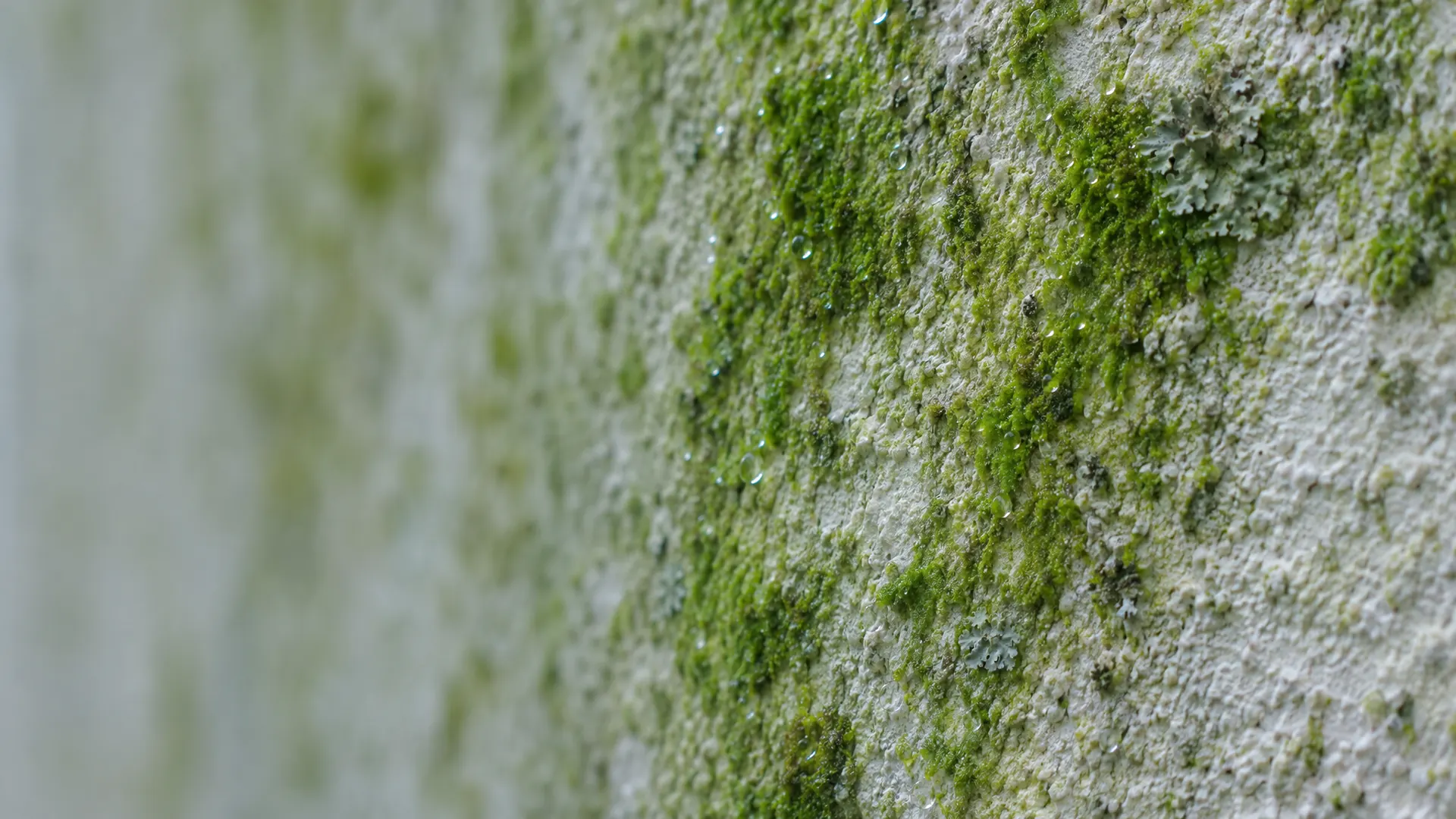
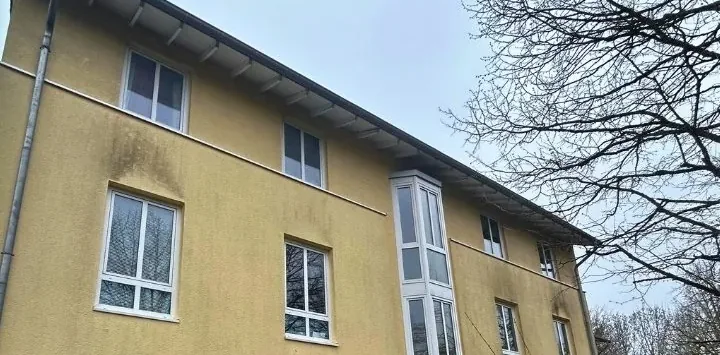
Algae usually appear as a green to grey-green film. It often starts on the north or west side, under window sills, at corners and where trees or hedges stand close to the house. Over time, individual patches turn into a veil that makes the whole surface look dull and dirty.
Not every dark spot is an alga. Black dots and dark streaks often come from fungi, orange-red growth from certain types of algae or lichens. What each colour means is explained in the article Green, black, red: which growth is it?
Why facades turn green
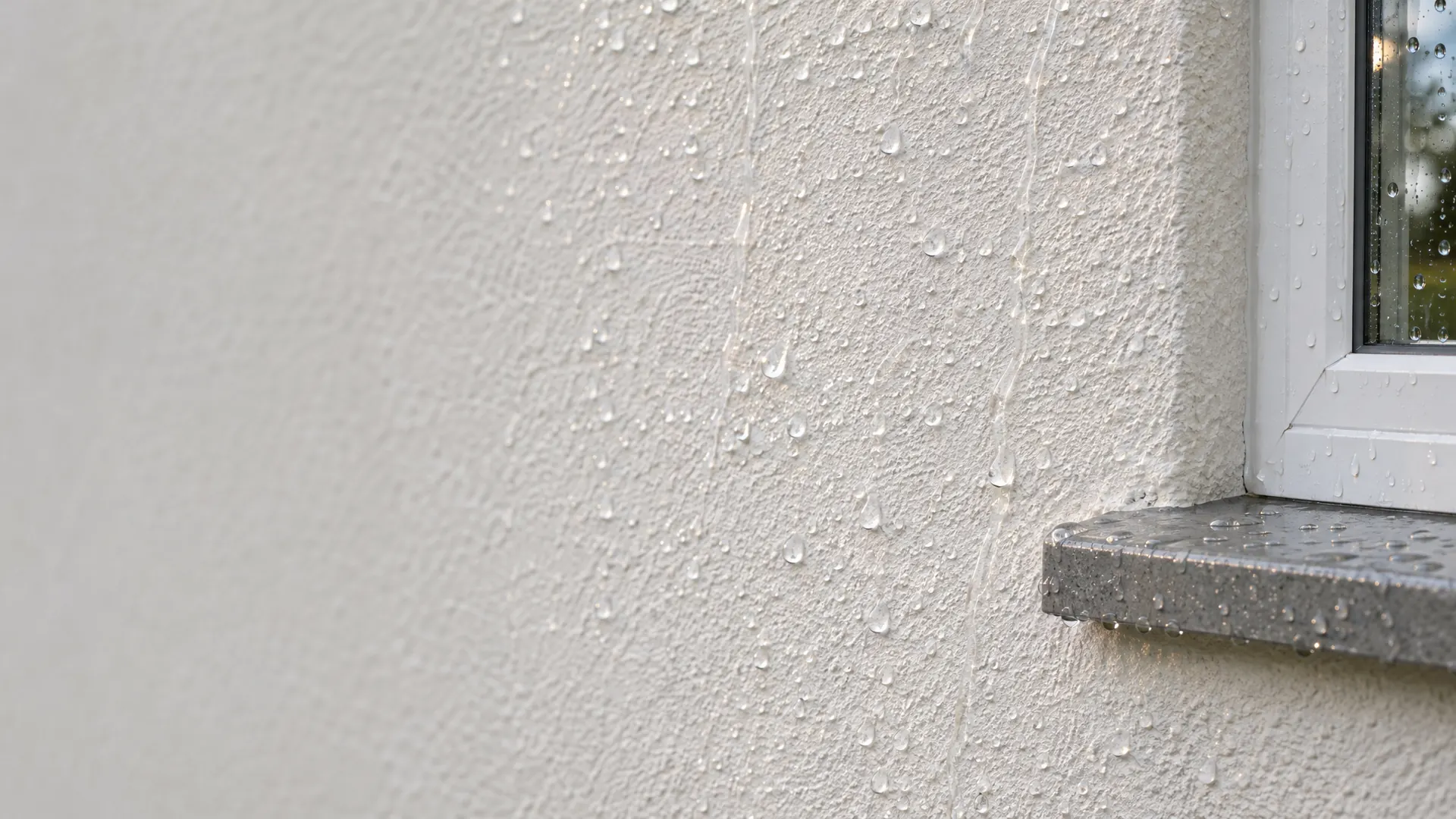
Algae spores float through the air everywhere. Whether they settle depends above all on moisture. A facade that dries quickly after rain or dew usually stays clean for a long time. If it stays damp for hours, the spores find ideal conditions.
A wall stays damp, for example, if
- it faces the weather side and gets a lot of driving rain,
- trees, hedges or neighbouring buildings shade it and the sun hardly dries it,
- roof overhangs are missing or gutters and window sills do not drain water away properly,
- condensation forms on the surface at night.
The last point explains why insulated facades in particular turn green. The thin render on the insulation gets hardly any heat from the masonry. On clear nights it cools below the air temperature, and moisture condenses on the surface like on a car windscreen. More on this in the article Why insulated facades so often turn green.
Do algae damage the render?
An honest look is worthwhile here. According to current knowledge, pure algae growth is above all a cosmetic problem: it makes the facade unsightly but does not usually damage the render directly. Mosses and lichens are a different matter. They anchor themselves more firmly in the surface and can attack the coating and render in the long run.
Even so, there are good reasons not to wait too long. A film of growth holds moisture on the surface, and other organisms settle more easily on a dense carpet of algae. And a simple rule applies: a young, thin film is much easier and gentler to remove than one that has built up over years.
What helps against algae
There are basically three ways, and which one fits depends on the condition of the facade:
- Washing by hand: Small, easily accessible spots can be cleaned with water and a soft brush. For large areas and upper floors this is hardly feasible. What to watch out for is explained in the article Cleaning your facade yourself.
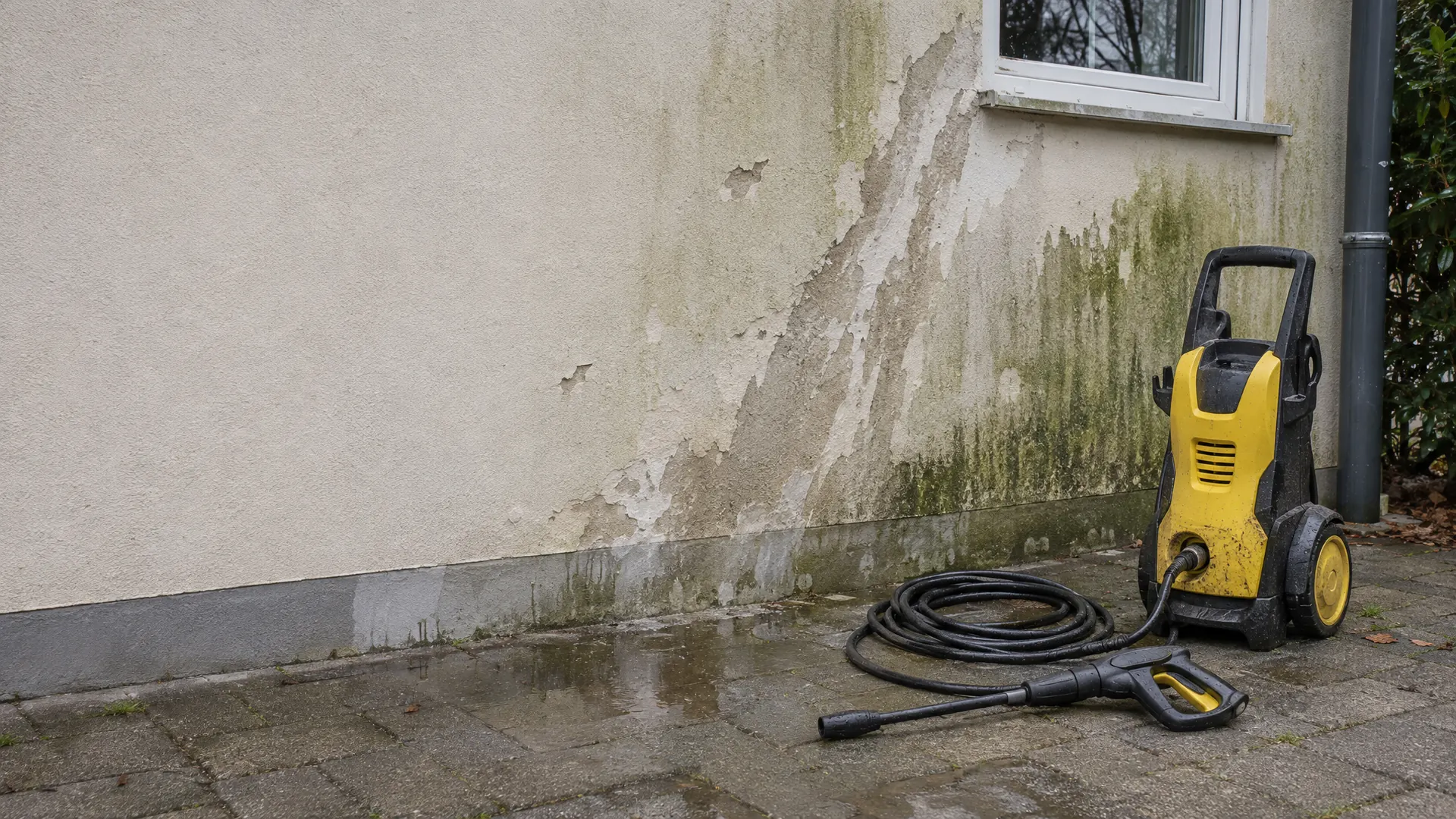
- Professional cleaning: A specialist company loosens the growth with a cleaning agent and rinses it off. What matters is a method that is gentle on the render, in other words without high water pressure.
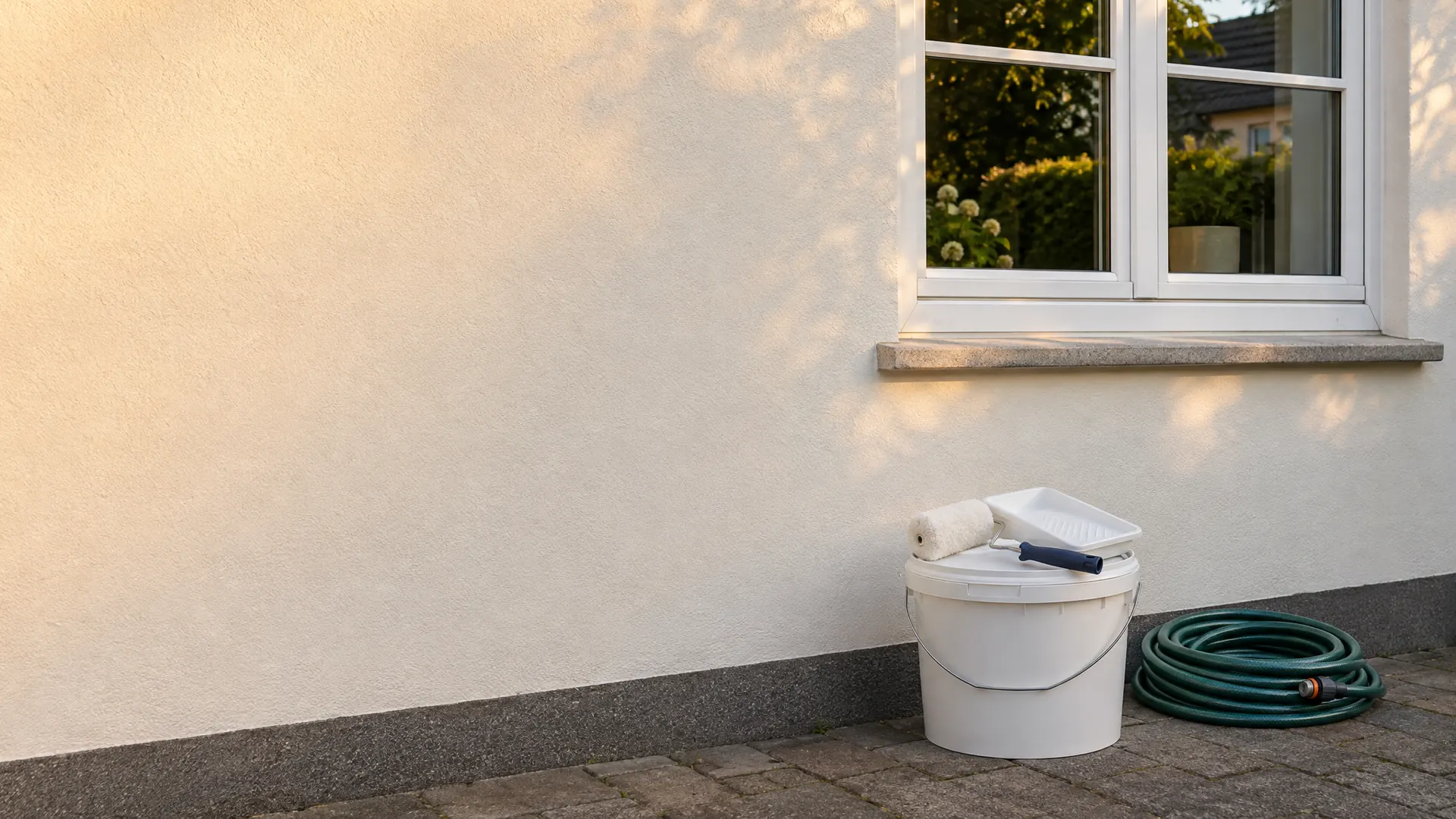
- Repainting: It is necessary if the paint is flaking, the render is cracked or you no longer like the colour anyway. Before painting, however, the facade must be cleaned as well.
Whichever way you choose: if the cause is ignored, the growth comes back. Cutting back hedges, keeping gutters clear and protecting the facade after cleaning buys you the most time. What helps is explained in the article Protecting your facade from algae.
How FassadenTrio does it
We specialise in exactly this problem. Our cleaning agent loosens algae, fungi and dirt, then we rinse at low water pressure, and finally we apply a transparent long-term protection that delays new growth for up to 5 years. As a rule, we do not need scaffolding for this. The details are shown on the page Process.
The best way to see whether cleaning is enough for your facade is with your own eyes: we clean a test patch on your house free of charge.
See the result on your own building
We clean a section of your facade free of charge. Then you decide whether we should clean the whole facade.