Clean the facade with a pressure washer?
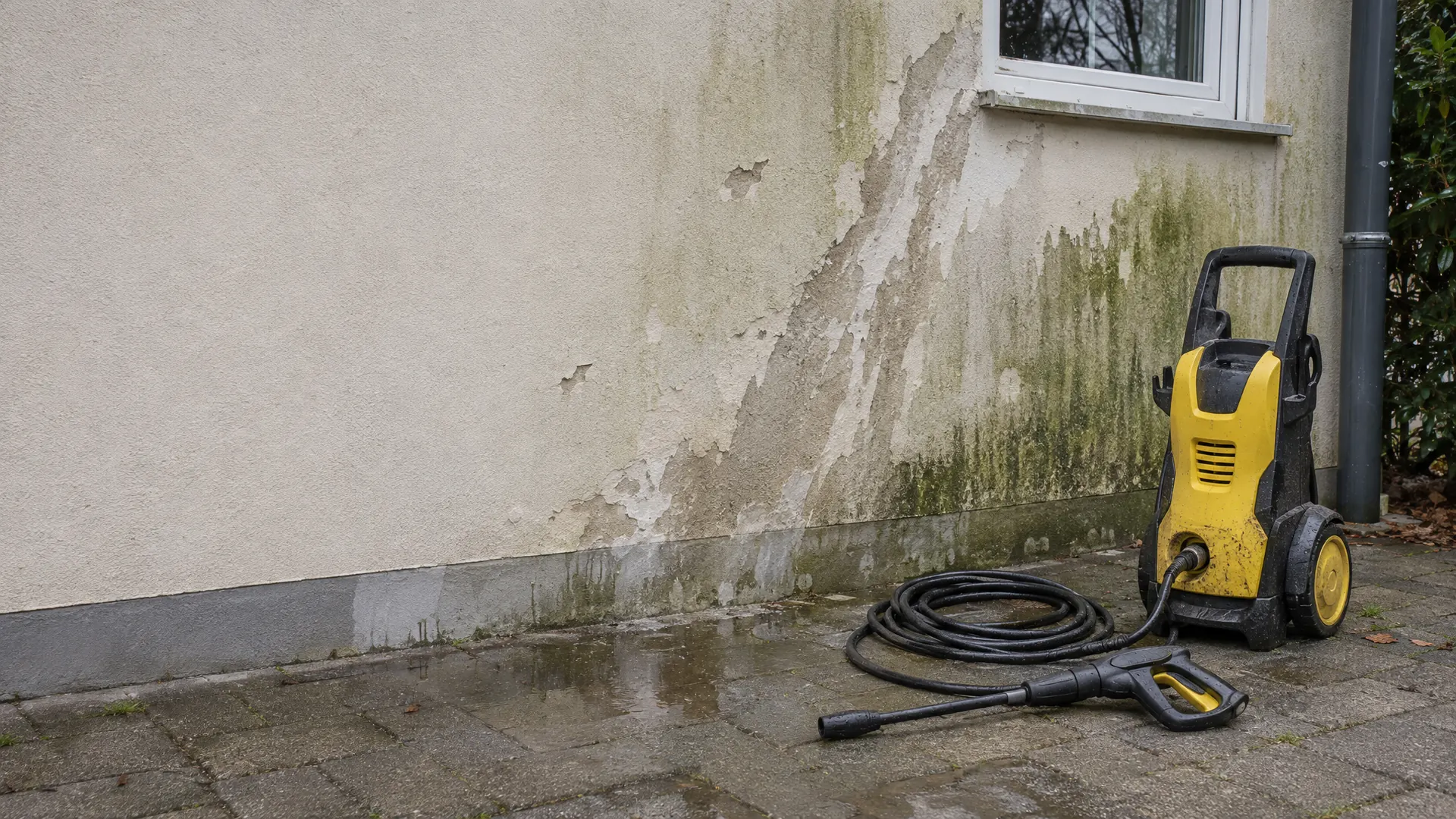
The pressure washer sits in many garages, the green facade right next to it. The idea is tempting. But what works well on the patio can do more harm than good on the wall of the house.
In brief
- A hard water jet can roughen and damage render and force water into cracks and joints.
- Insulated facades are particularly sensitive.
- It is gentler to loosen the growth first and then rinse it off at low pressure.
What the hard jet does to the render
A pressure washer removes dirt with force. On paving or patio slabs that is the idea. But render is not made for it. The jet can roughen the top layer, wash out fine grains and strip paint. If you look closely afterwards, you often see streaks and patches where the jet hit one spot for longer.
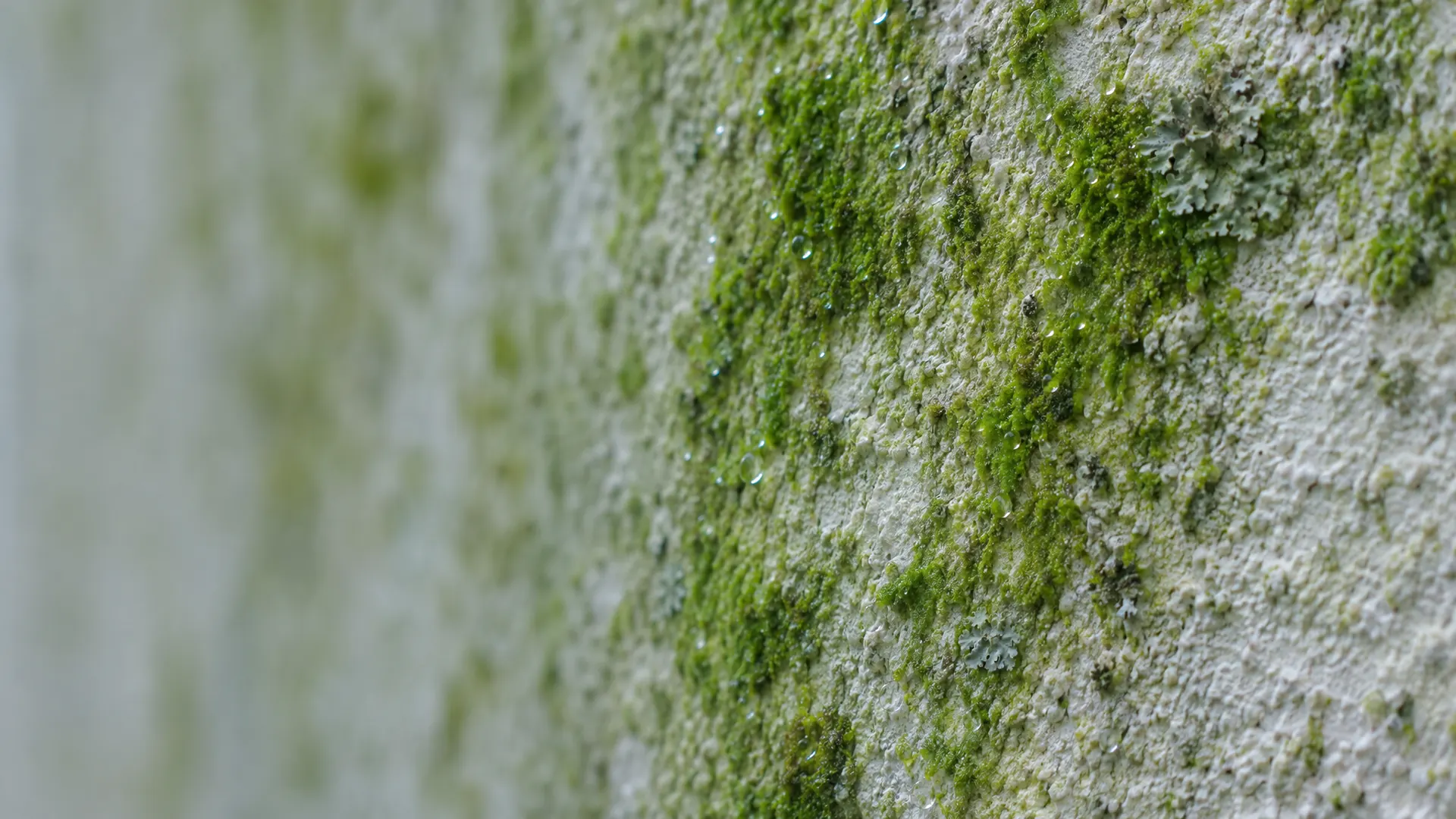
A roughened surface has another drawback: it absorbs water more easily and dries more slowly. That is exactly what algae and fungi like. The next film then often comes back faster than before.
Particularly delicate: insulated facades
Many houses have external insulation, a so-called external thermal insulation composite system. Here there is only a thin layer of render on the insulation. A hard jet can damage this layer and force water into cracks, connections and joints, for example at window sills. Moisture behind the render is hard to get out again. Read more about insulated facades in the article Why insulated facades so often turn green.
Other points that are often overlooked
- The height: From the ground, a pressure washer rarely reaches the gable. Working with a lance on a ladder is dangerous because the recoil can cost you your balance.
- The growth is not really gone: Water alone rinses off the visible part. Residues remain in the pores, and the growth returns quickly.
- The waste water: What runs off the facade contains dirt, paint residues and possibly agents from an earlier coating. The German Environment Agency points out that a pressure washer can even increase the leaching of biocides from facade paint. Many towns have their own rules on where such waste water may go.
What works better
The reverse approach is gentler: loosen the growth first, then rinse it off. You can clean small, accessible spots yourself with water and a soft brush. How best to do this is explained in the article Cleaning your facade yourself. For entire facades, specialist companies loosen the growth with a cleaning agent that is left to work. After that, low water pressure is enough to rinse it off.
How FassadenTrio cleans
That is exactly how we work: a specially developed cleaning agent loosens the growth, then we rinse it off at such low pressure that the render remains undamaged. With telescopic lances up to 12 metres long, our technicians reach the gable from the ground. Finally, we apply a transparent long-term protection that delays new growth for up to 5 years. The three phases are shown on the page Process.
If you would like to see what this looks like on your house: the test patch is free of charge.
See the result on your own building
We clean a section of your facade free of charge. Then you decide whether we should clean the whole facade.